Advanced Hemodynamic Physiology:
Beyond Blood Pressure

Early Diagnosis & Recognition

Diagnosing Shock Early

>30–40% Occult blood volume loss before systemic hypotension manifests

Endogenous sympathetic surge and arterial vasoconstriction maintain systemic arterial pressure (MAP ≥ 65 mmHg) despite a catastrophic collapse in stroke volume and cardiac output. By the time systemic hypotension manifests, severe lactic acidosis, tissue hypoxia, and multi-organ failure may already irreversible.
Therapeutic Titration & Support

Management of shock

>50% Mortality rate in acute circulatory failure and cardiogenic shock

Titrating vasopressors solely to achieve arbitrary pressure numbers adversely elevates left ventricular afterload, escalating myocardial oxygen demand and worsening ventriculo-arterial uncoupling. Clinicians lack continuous bedside insight to guide inotrope and vasopressor use, fluid responsiveness, or escalation to mechanical circulatory support.

Perioperative Optimization

Optimising High-Risk Surgery

Beyond MAP 2026 ESC Consensus on looking beyond static blood pressure targets

In major surgery, hypotension is associated with organ dysfunction but the relationship is weak and highly variable between individuals. Occult hypoperfusion can occur with "acceptable" blood pressure in some cases. Conversely, empiric fluid boluses or vasopressors given for transient pressure drops cause venous congestion, tissue edema, hypoperfusion and directly drive postoperative Acute Kidney Injury (AKI) and myocardial injury.

The KymoMetrics Approach: From Hemodynamic Physiology to Actionable Insights

KymoMetrics addresses the narrow focus on (mean) blood pressure by making physiology accessible: Firstly, by extracting physiological information hidden in routine arterial and venous pressure waveforms. Secondly, by transforming the physiological data into actionable insights in a closed decision loop. We tackle the relevant questions: Why is the blood pressure low? How to correct the blood pressure? Is the intervention working?

Beyond Mean Pressures

Extracting physiological information from continuous arterial and central venous pressure data already available at the bedside.

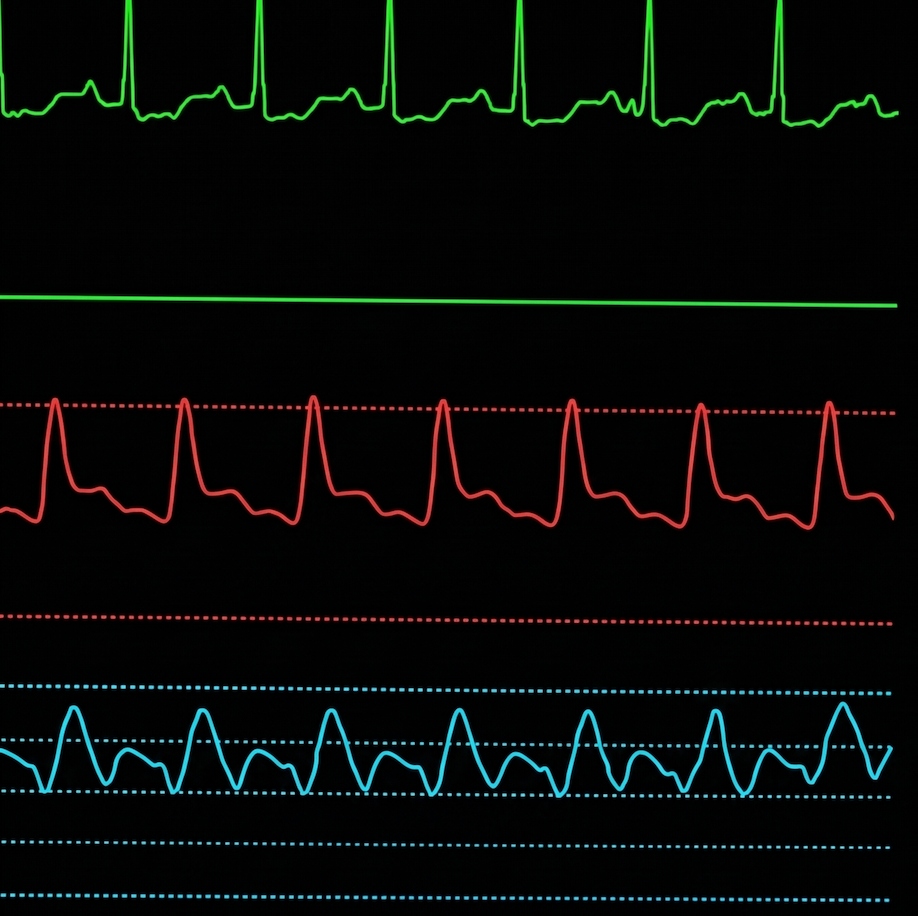
High-frequency bedside monitor waveforms showing ECG, arterial pressure, and CVP

Routine Bedside Monitor: Crude Numerical Surrogates

Arterial and central venous pressure data are transduced continuously, yet most of the data are unused, information simply compressed into crude numbers (e.g., MAP ≥ 65 mmHg, CVP = 13 mmHg).

  • Occult hypoperfusion: Vasoconstriction preserves MAP while microvascular beds starve of oxygen.
  • Static venous surrogate: CVP is compressed to an uninformative single number (e.g. 13), discarding the information contained within the waveform.
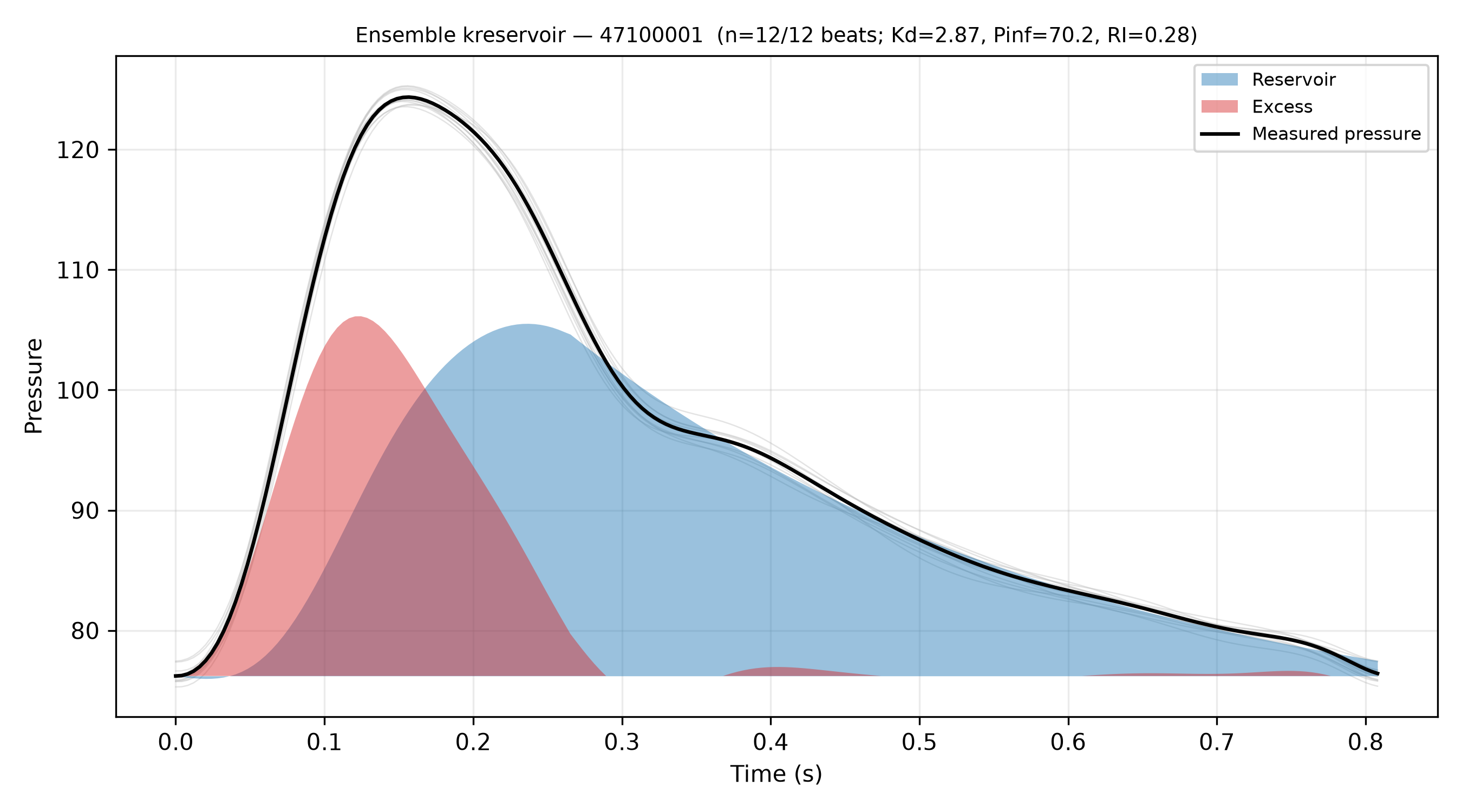
Clinical reservoir wave decomposition extracted from arterial pressure waveform

Arterial Reservoir Pressure (RWA)

Continuous arterial blood pressure is decomposed into Otto Frank's elastic reservoir pressure (Pres) and wave-propagation excess pressure (Pex). Resolves true systemic compliance (τ = RC), characteristic impedance, forward compression wave energy (W1), and wave reflection intensity (Pb/Pf) to decouple vascular tone from cardiac contractility.

  • True vascular compliance: Detects reservoir collapse and compromised compliance hours before hypotension strikes.
  • Decoupled contractility: Separates myocardial pumping failure from peripheral arterial load and wave reflection.
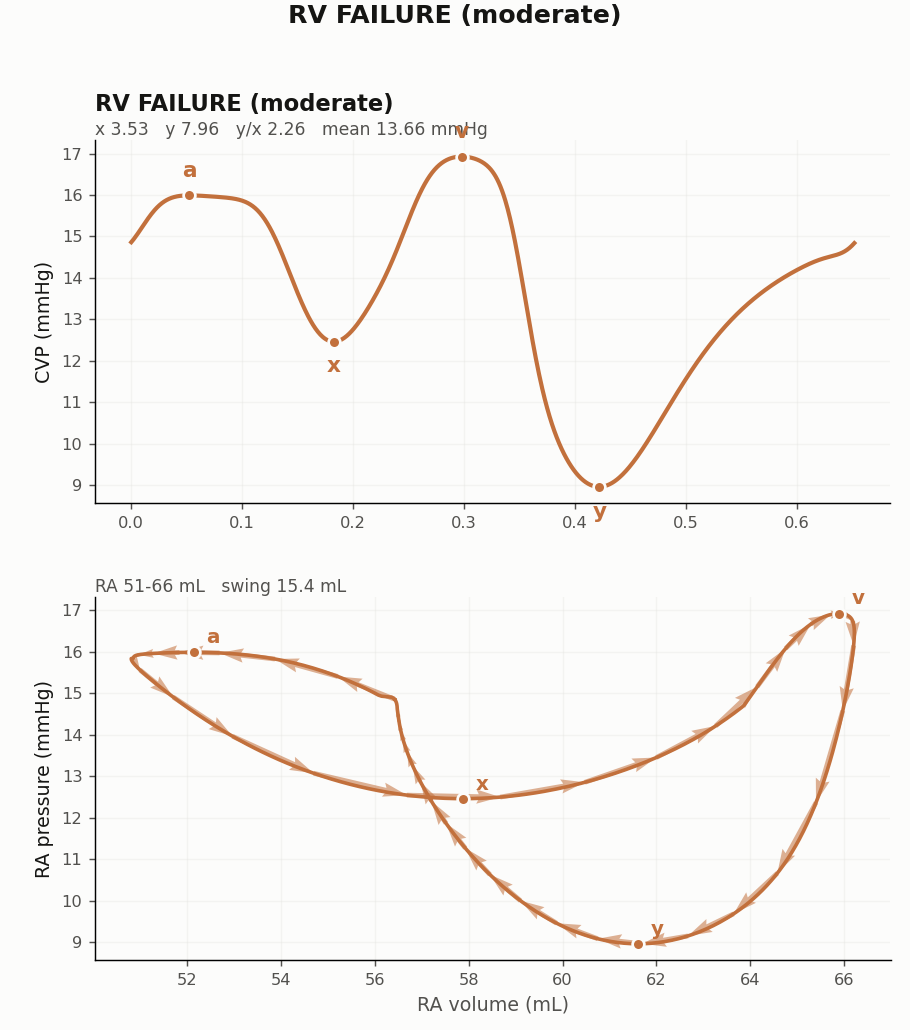
Right atrial pressure volume loop reconstruction and CVP morphology

Central Venous Pressure (CVP) Waveform

Central venous pressure is far more than a static hydrostatic number. Interrogating right atrial cycle morphology (a, c, v peaks and x, y descents) and right atrial PV loops provides real-time assessment of dynamic venous return impedance, right ventricular compliance, and fluid responsiveness—avoiding the risks of pulmonary artery catheters.

  • Right ventricular compliance: Continuous assessment of right heart filling dynamics and venous return kinetics.
  • Fluid tolerance & congestion: Identifies impending RV overload and backward organ congestion before fluid administration.

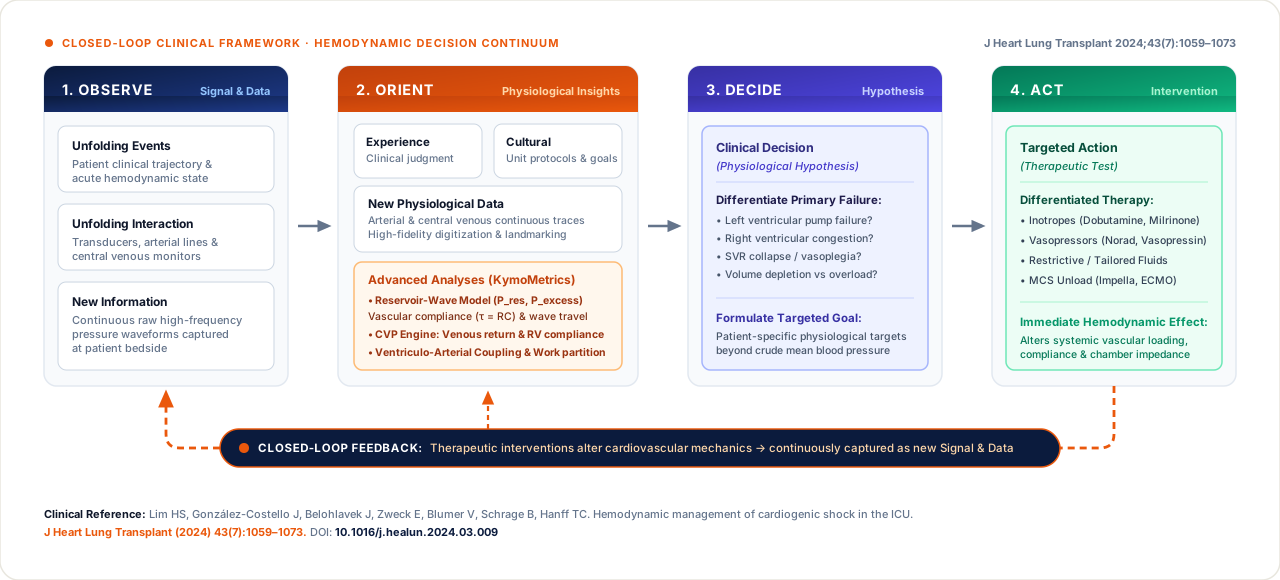
The Decision Continuum & The Hemodynamic Decision-Making Loop

Advanced data analytics to turn extracted physiological information into diagnostic understanding and informed bedside decisions during shock management and high-risk surgery.

01
Signal
Pressure transducers continuously stream arterial and venous waveforms.
→
02
Data
Real-time digitization, beat isolation, fiducial landmarking, and respiratory artifact removal.
→
03
Information
Separation of pressure decay (τ = RC), excess wave energy (W1), and right atrial cycle events.
→
04
Understanding
Differentiated cardiovascular profiling: venous return, right-heart compliance, and ventriculo-arterial coupling.
→
05
Decision
Precision bedside intervention: patient-tailored fluids, inotropes, vasopressors, or management of mechanical circulatory support.
The Hemodynamic Decision Framework: Observe, Orient, Decide, Act with Closed-Loop Feedback